
Hi readers, Peter Tambroni here from MostlyBass.com.
Monitoring and maintaining correct humidity levels for your bass can be a challenge. Many players don’t do anything, which seems to be the current trend.
However, if you are worried about it, here are two easy steps to ensure correct levels.
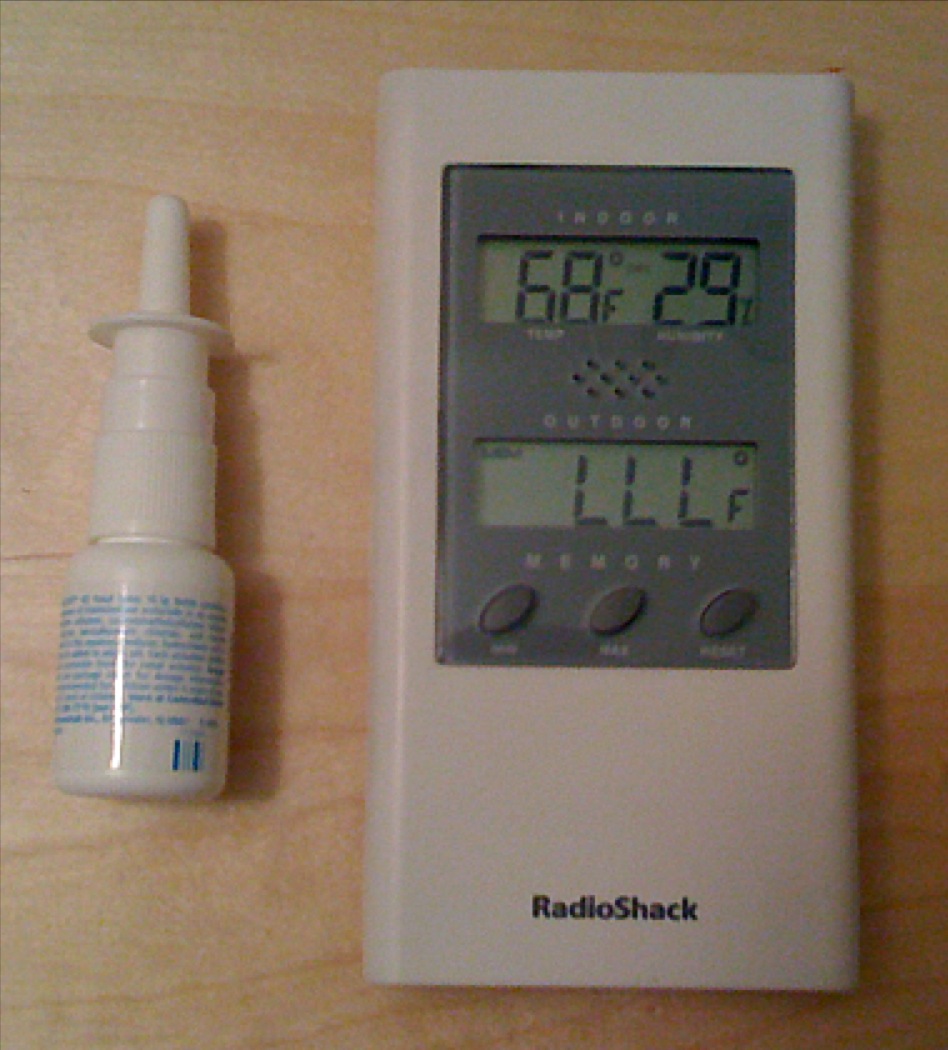
1. Buy a digital thermometer with a hygrometer from Radio Shack. These are accurate and inexpensive.
2. Rather than using Dampits which can actually drip and cause water damage, use a nasal mister! It delivers a fine mist which won’t damage the bass and is more useful anyway. 2 puffs a day when the humidity is below 40 percent is all you need.
Bass News Right To Your Inbox!
Subscribe to get our weekly newsletter covering the double bass world.
Nice tip, Pete–I just put it out on Twitter!
Thanks for the tip Peter. Question: Where do I spray? Do I spray near the bass (not at it) and fairly close? Distilled water too?
Thanks!
Great question – I put two mists /puffs (NOT sqirts / sprays) – make sure your using one that mists or atomizes in an f-hole so it’s inside the bass. I don’t use distilled water – I think it’s a waste of time – we don’t use it in humidifiers and our atmosphere isn’t distilled 🙂
Thanks for reading!!
Peter
Hi Peter,
I’ve been hearing about this suggestion from some other people, too. I’ve never personally had trouble with dampits (once I learned to wring them out before putting them in the bass!), but I have always been curious about their effectiveness. Do you know any way of actually _testing_ which method best distributes humidity?
Thanks!
Another good question. This will be a little difficult but here are some thoughts. The indoor / outdoor thermometer / hygrometer from Radio Shack has an outdoor sensor although I don’t know if it does humidity as well. If so, just put that in the bass.
According Barrie Kolstein, humidity fills space like a bathtub – bottom to top. Therefore the Dampits would mostly be humidifying the lower half where as increase your distribution with the mister.
I guess another non scientific method is – if your bass is stable and cracks aren’t appearing / growing and seams aren’t coming apart, you’re fine!