
This series is based on my own experiences as a professional freelance classical orchestral musician. While everyone has a slightly (or vastly) different individual path in the freelance world, I believe that these experiences reflect what a growing majority of orchestral freelancers are dealing with in their professional lives.
__________
The traditional pot of gold at the end of the rainbow for a student pursuing professional instrumental study at a university is a position in a salaried symphony orchestra. Ever since my early teens I was constantly told that I had the goods required to get one of these positions. That may have been the case (and may still be the case), but the number of available full-time orchestral positions has been shrinking yearly at a regular rate, while the number of students seeking these jobs has grown exponentially.
Before I get into the raw statistics, a brief history of the symphony orchestra in the

The golden age of full-time orchestral employment began with the rapid influx of corporate giving in the late 1960s and began to decline slowly but steadily in the early 1980s. Prior to the 1960s, few of the top tier orchestras paid a living wage. Chicago Symphony musicians mowed lawns in the summer to pay their bills in the 1940s, and orchestras with a more modest pedigree (like the Milwaukee Symphony) were often volunteer community orchestras. Most performing classical musicians prior to the 1960s were essentially freelancers, playing in a wide variety of venues. Symphonic work made up only a small percentage of the income of classical musicians in the first half of the 20th century. Vaudeville, musical theater, recordings, radio work, jingles, and other such work presented the performing musician with a plethora of options for employment, and symphonic music was definitely not the highest paying activity. For years the Chicago Union Hall resembled the Chicago Board of Trade as contractors and musicians bustled about, each vying for the other’s services.
The number of music schools offering performance degrees also mushroomed during this time, as did the number of students entering such programs. Again, there are many contributing factors to this trend, but at least part of the reason for this increase in enrollment and number of programs had to do with the new career paths available to professional musicians. Being an orchestral musician was a “respectable” career complete with pension, benefits, regular hours, and the like. The fact that this salary and benefits package was largely funded by corporate giving and not by ticket sales or other such hard transactions did not matter in the minds of most musicians. There were jobs and this next generation of conservatory-trained musicians was coming to get them.
It is interesting to note that, although more people are listening to classical music than ever before, a strong case can be made that classical music had its widest saturation in the public sphere in the 1950s. Leonard Bernstein’s tenure with the New York Philharmonic, the rise of a stable, prosperous, post-World War II middle-class audience, the rise in popularity of the 33 1/3 LP record—these and many other factors contributed to this period as being, if not the only golden age, then certainly one of the golden ages of classical music popularity.
This era is a good decade-and-a-half before the explosion in corporate giving that precipitated the creation of so many orchestral jobs, and it is worth noting that the popularity of this art form did not coincide with the infusion of cash into the infrastructure delivering this art form.

The jobs created by corporate giving in he late 1960s and early 1970s had both positive and negative consequences for the orchestral world. By 1975 most major (1,000,000+ people metro area) had a full-time symphony orchestra. This created many new employment opportunities for classical musicians, which is a good thing, but it also created large bureaucratic organizations whose purpose was self-perpetuation and growth. Again, this is not necessarily a negative development, but it represents a distinct shift in the world of classical music dissemination. American classical music in the 19th and early 20th century was based on a commercial need. Impresarios from these earlier generations would hire musicians for single engagements with the sole purpose of making a buck. If the production turned a profit the impresario would mount another production in a similar vein and continue mining a profit until that stream dried up, at which point he would mount another type of production.
Contemporary Broadway productions are a great example of this sort of entrepreneurial activity today. Believe me, no one mounts ‘The Lion King’ or ‘Wicked’ as a not-for-profit venture. The backers of these shows are out to make a buck, and they do, or the show closes.
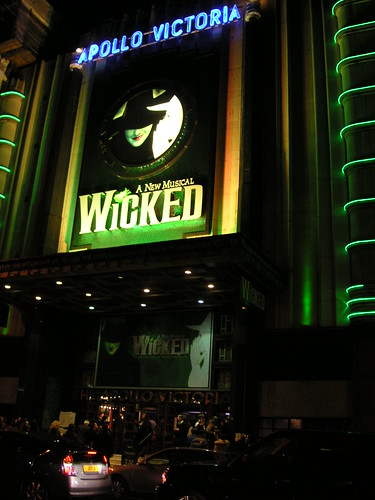
This is not to say that a symphony orchestra should be run like this. In fact, it is a pretty bad idea to run a symphony orchestra like this. A lot of the work I do is for modern day impresarios, and the work is often of dubious artistic merit.
The point I would like to emphasize is that music was expected to turn a profit prior to the mid-20th century. Orchestra jobs of these earlier generations didn’t pay much because they didn’t earn much in profit. Many musicians probably considered these orchestra jobs to be a supplement to a full and busy individualistic freelance career.
As these symphonic institutions (The Cleveland Orchestra, The Philadelphia Orchestra—notice the incorporation of “The” into the organizational names) grew, they naturally took on more employees to maintain and increase corporate and individual giving. The percentage of budgetary revenue generated from ticket sales shrank as salaries climbed ever higher for musicians. Orchestras by the early 1980s resembled museums in their structure more than the entrepreneurial one-shot ventures of impresarios of the previous generation.

Symphonic institutions have had differing levels of success depending on region, economy, culture, local corporate and philanthropic entities, and a myriad of other factors. While some have succeeded and some have failed, it is important to note that the number of orchestral playing positions available in these organizations nationwide reached their highest numbers in the late 1970s and have been steadily declining since that time.
Although the
Other orchestras retrench positions as people retire for budgetary reasons. Several prominent professional orchestras recently eliminated their full-time harp position after the previous player retired, and many orchestras have been playing short in certain string sections (using only 10 instead of 12 cellos) instead of filling these positions at an audition.
Read the complete series:
- Part I – Adjunct University Teaching
- Part II – Realities of Professional Freelancing
- Part III – The Rise and Fall of the Full-Time Orchestra
- Part IV – Rising Tide, Shrinking Pool
- Part V – Regional Orchestras
- Part VI – The Vicious Cycle
- Part VII – Private Teaching
- Part VIII – Burnout
- Part IX – Rethinking Music Performance Degrees
- Part X – Refocusing (Musical Entrepreneurship)
Addendum I: The Real Cost of Driving to Gigs for the Freelance Musician
Addendum II: Tainting the Academic Waters with Pay-Per-Student Teaching
____________
References:
- Who Killed Classical Music? by Norman Lebrecht
- Mozart in the Jungle by Blair Tindall
- Orchestra – Wikipedia (read 20th century orchestra trends in this entry)
- Norman Lebrecht – Official Website
Bass News Right To Your Inbox!
Subscribe to get our weekly newsletter covering the double bass world.
I’d love to have some references for the data you cite in this piece. Can you update with sources?
Most of this information comes from ‘Who Killed Classical Music’ and ‘Mozart in the Jungle’, and I will add reference links to the bottom right now. Thanks for mentioning my oversight, Jacque.
This series of posts is pretty overwhelming, but incredibly important. Thank you so much, Jason. Everyone thinking about trying to construct a career as a classical musician (or any other kind, for that matter) needs to have a clear sense of this stuff. Having a useful gameplan depends on knowing what the game actualy is!
Just so everyone knows, Norman Lebrecht has his critics, although I think you probably have your facts straight in your article, Jason. I remember that I tried to read “Who Killed Classical Music,” and just the first chapter made me sick to stomach over the waste and excess of conductors and soloists. I couldn’t continue. I never have tried to finish reading it.
This series of posts is pretty overwhelming, but super important. Thanks a lot for such thoughtful writing, Jason. Everyone who is trying to construct a career as a classical musician needs to have this information. You can’t very well make a good game plan if you don’t know what the game is…
Jason-Very well-written, excellent post. I would suggest that post WWII immigrants, amongst whom were many educated Europeans, created an audience and demand for “classical’ music, and financial support, to a certain extent.
You are right on target with this post. Most freelance musicians (myself included) work our tails off putting in as many hours of personal practice and on-stage performance time, and often twice the commuting time as people who play in full time orchestras. We often have to play difficult music without the luxury of adequate rehearsal time because of the smaller budget of the orchestras we play in, and we are expected to play at as high a professional level as people in full-time orchestras. If we can’t do the job properly (play in tune, count, show up on time, observe proper decorum) there are dozens of others who would be happy to be in our seats.
Thanks for all of the comments on this post. With this installment, I was trying to lay the groundwork for some theories of mine regarding this business, and I really appreciate all of the comments and elaborations.
The “Real” Road Warrior lost everything : His wife and child murdered and he was partially mamed after a motorcycle ran over his leg. He wandered out into the wasteland and learned to live again. I guess I’ve gone through something similar. I lost a Principal Bass position or rather it lost me due to non-payment of wages. My mother was killed by a drunk driver in ’02 while she was jogging at 6:30 a.m. on the Opposite Side of the road! And-I still miss my father (A composer and Music Professor)who died of cancer. However-if you’re still with me-There is light at the end of the dark tunnel. My music career may not resume in a prestigous position, but it will resume. I’ve even begun to teach again after a 2 year exodus. Never give up-never say die-and a good friend always helps.
Great take on . . . Rise and Fall Jason – couldn’t agree more. When you consider the ‘bombardment’ of modern day culture, traditional symphony orchestras have become or are in the process of becoming ‘musical museums.’ There are some bright spots remaining. True fans of classical music will be supportive, albeit dwindling along with fewer orchestras to supply their needs. One bright spot for me personally was to be part of the creation of a chamber orchestra in the early 2000’s. Although I moved out of the area, Allegro, Chamber Orchestra of Lancaster (PA) is still going strong because of great leadership and dedication of performers and avid audiences. BTW, the Lebrecht book is a wonderful analysis of the problem.